Skip to Content

Blog

Cabs and Classics: An Evening with Bell & Field at Crescent City Tap

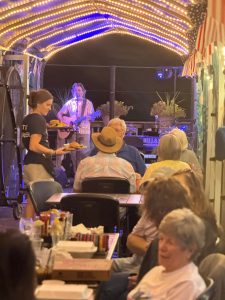
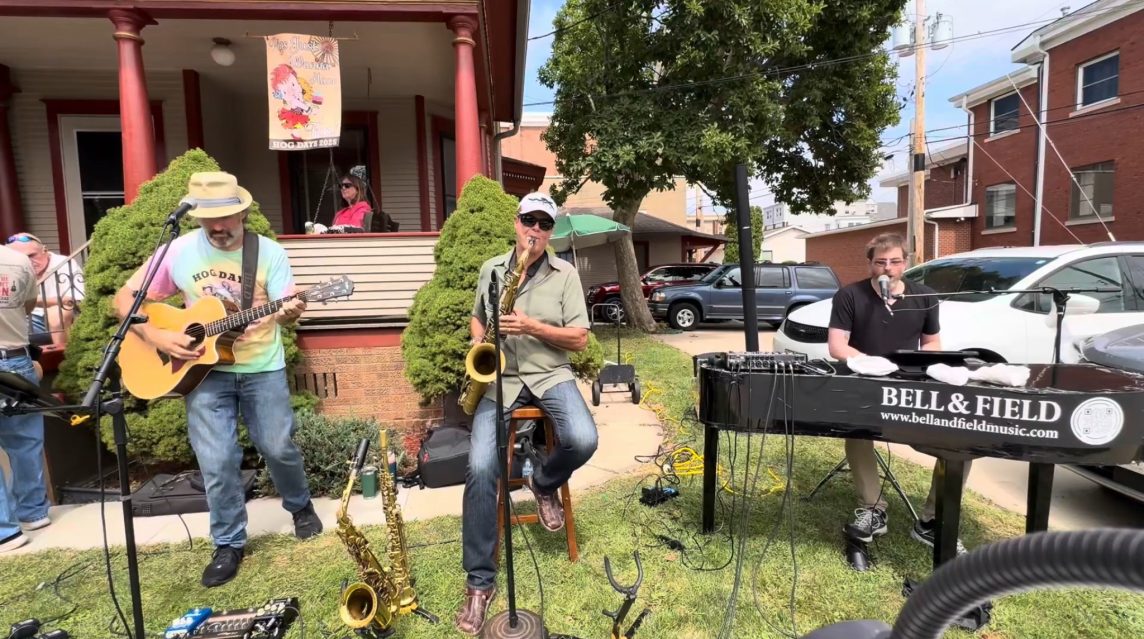
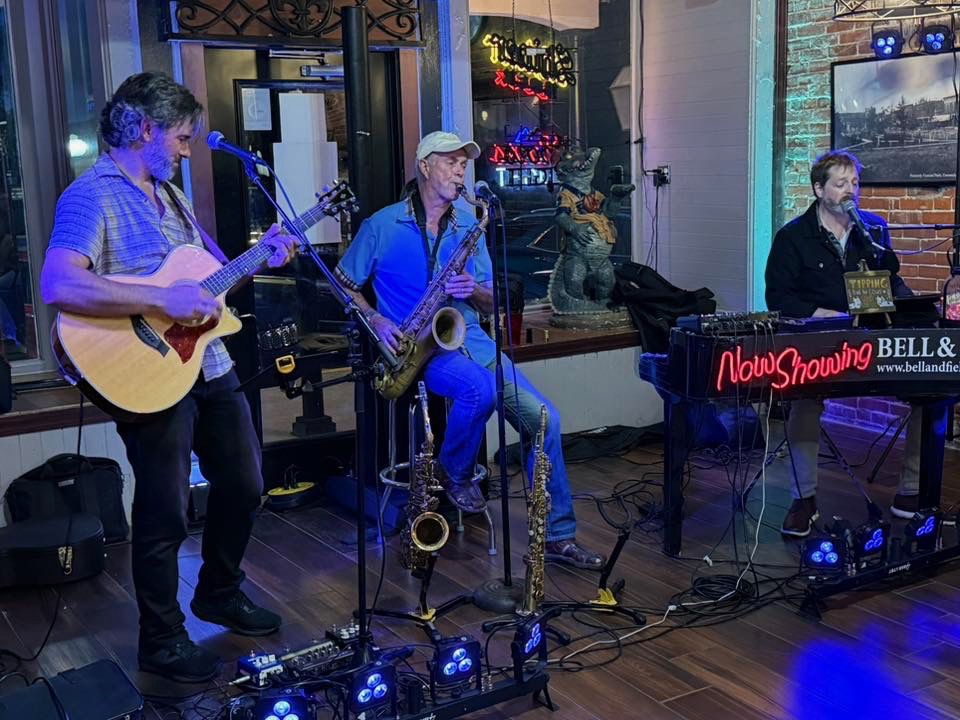
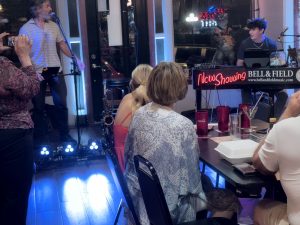
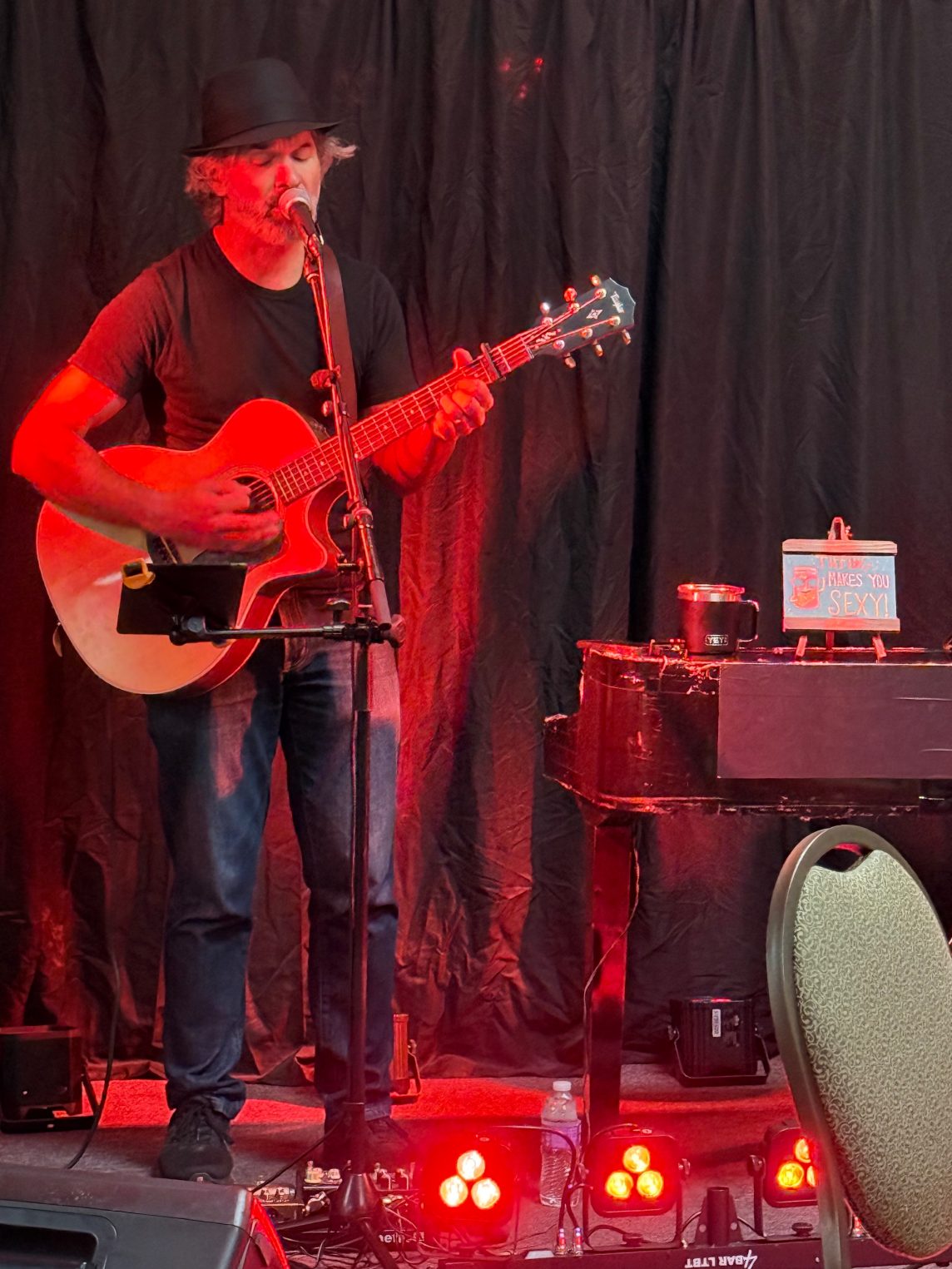
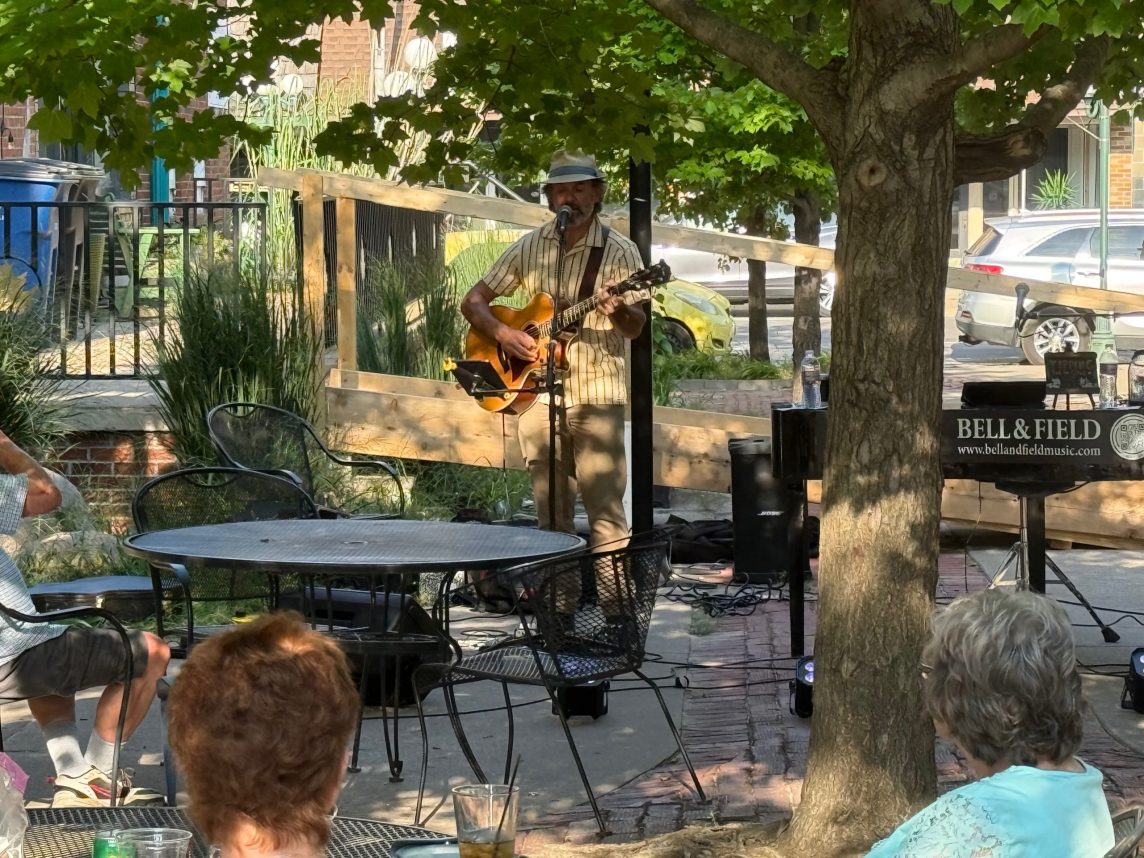
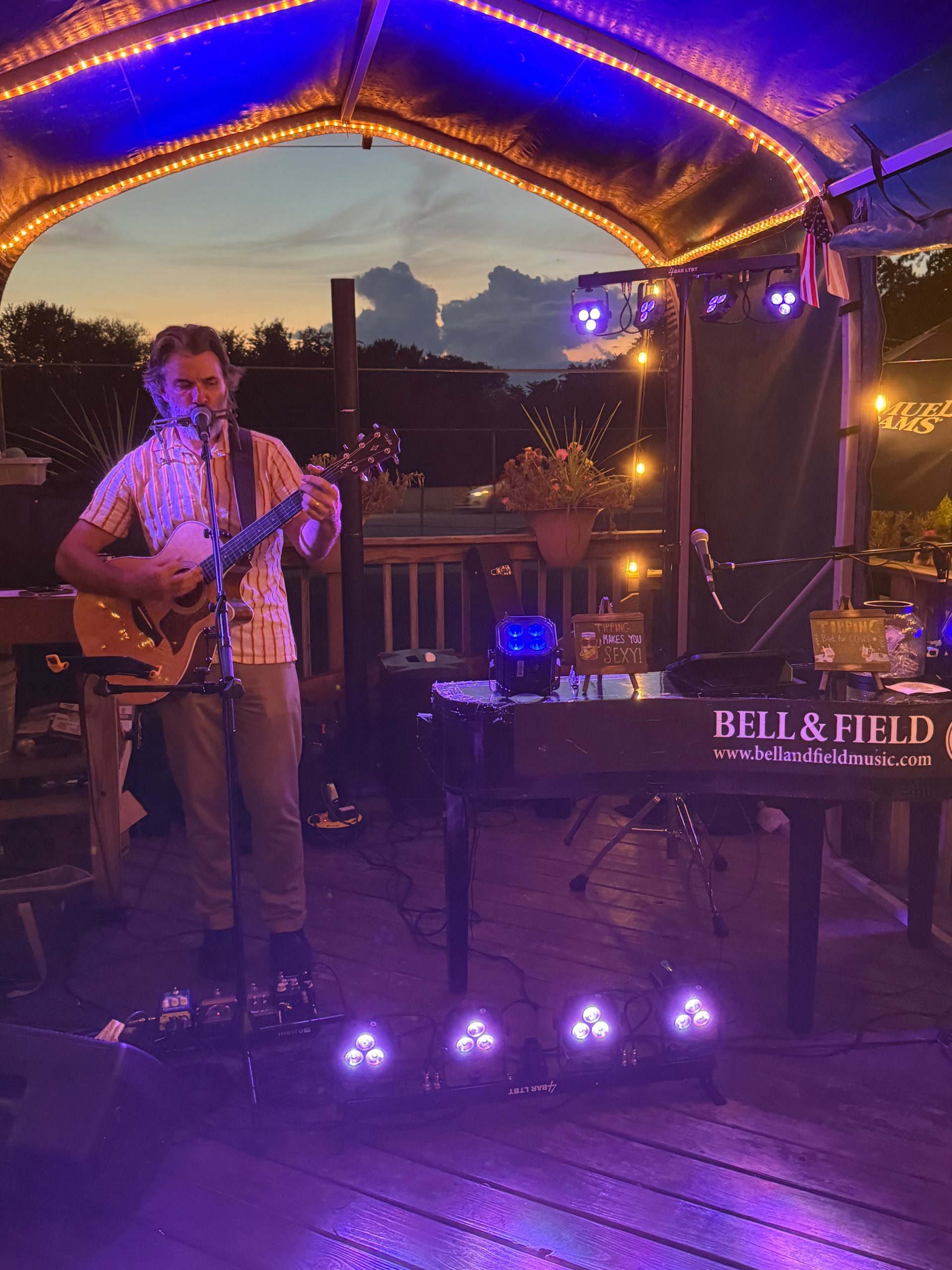
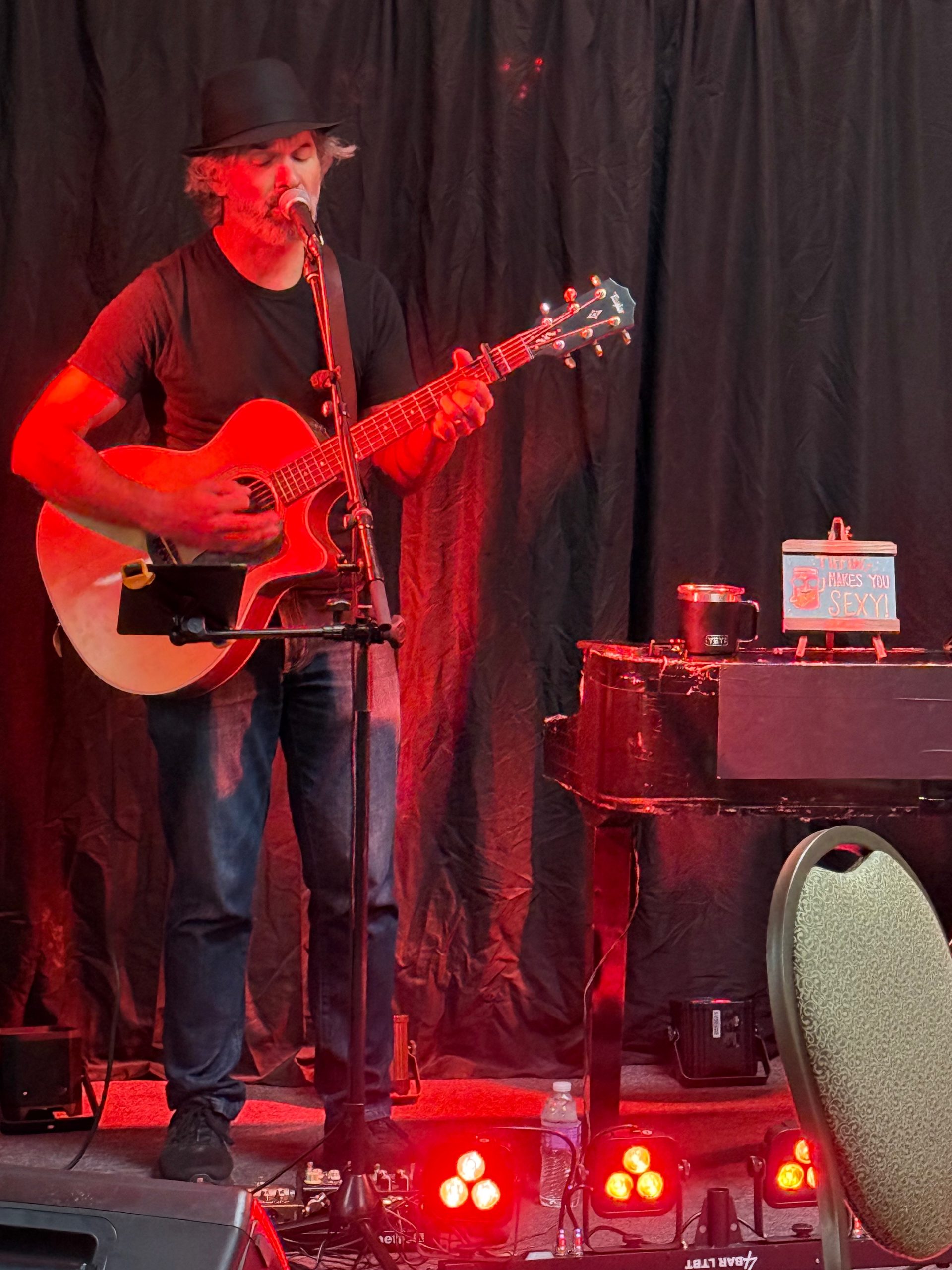
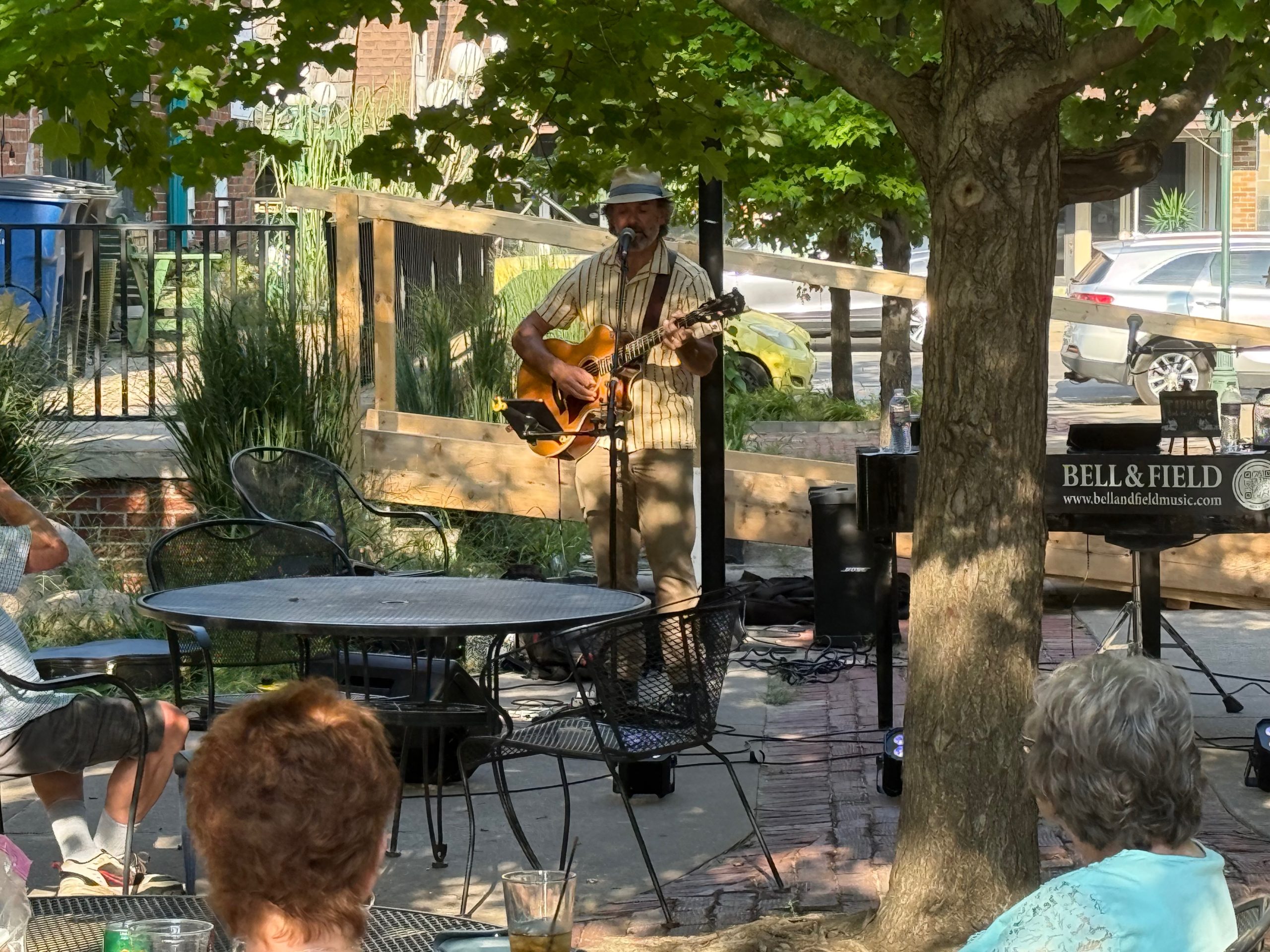
Tom Campbell playing guitar and singing into a microphoneLast night, we enjoyed a fun evening, performing at Crescent City Tap. The venue was bustling thanks to the heavy promotion and a wine tasting event coinciding with our show—perfect timing! As wine enthusiasts, we always appreciate the chance to drink some new Cabernets that aren’t typically available here. Delicious wine before a show? Count us in every time!

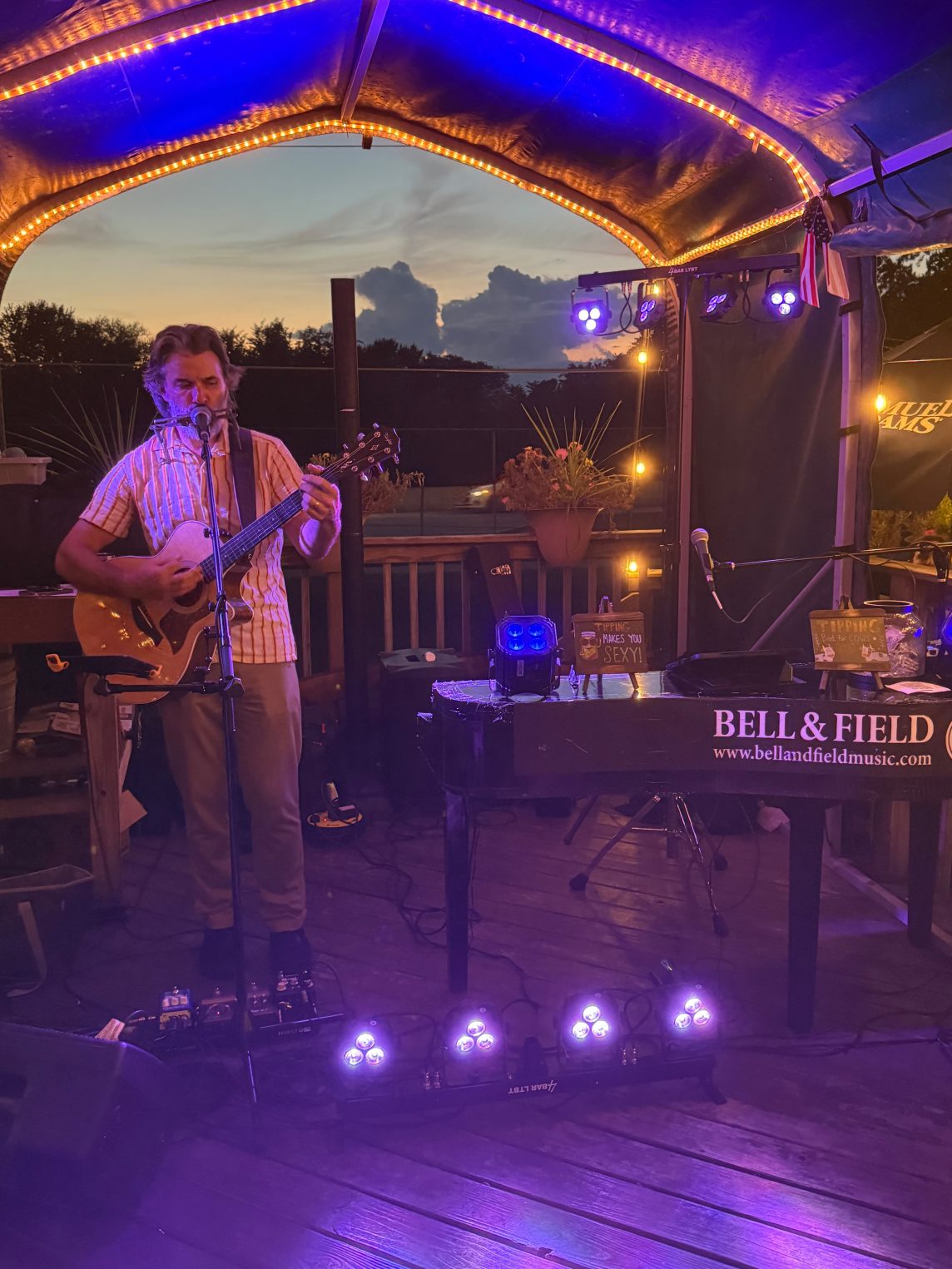
The staff and guests made some extra space for us by moving the massive pool table backward—a true beast to lift. That extra room allowed us to put up our black backdrop curtain, dramatically enhanced with four uplights and complemented by four 4-bars filling the ceiling and performance area with warm, inviting colors. It created exactly the comfortable atmosphere we always aim for.

Our goal with Bell & Field isn’t to be the center of attention but rather to provide the right music to complement good conversation, food, and drinks. As such, we often focus on laid-back tunes that set a relaxed mood—which seemed to be a good fit for the crowd that night. We were excited to debut some classic songs we’ve recently added to our set, including “I Love A Rainy Night” by Eddie Rabbit, “Blue” by the Jayhawks, and the beautiful “Beautiful Boy” by John Lennon.

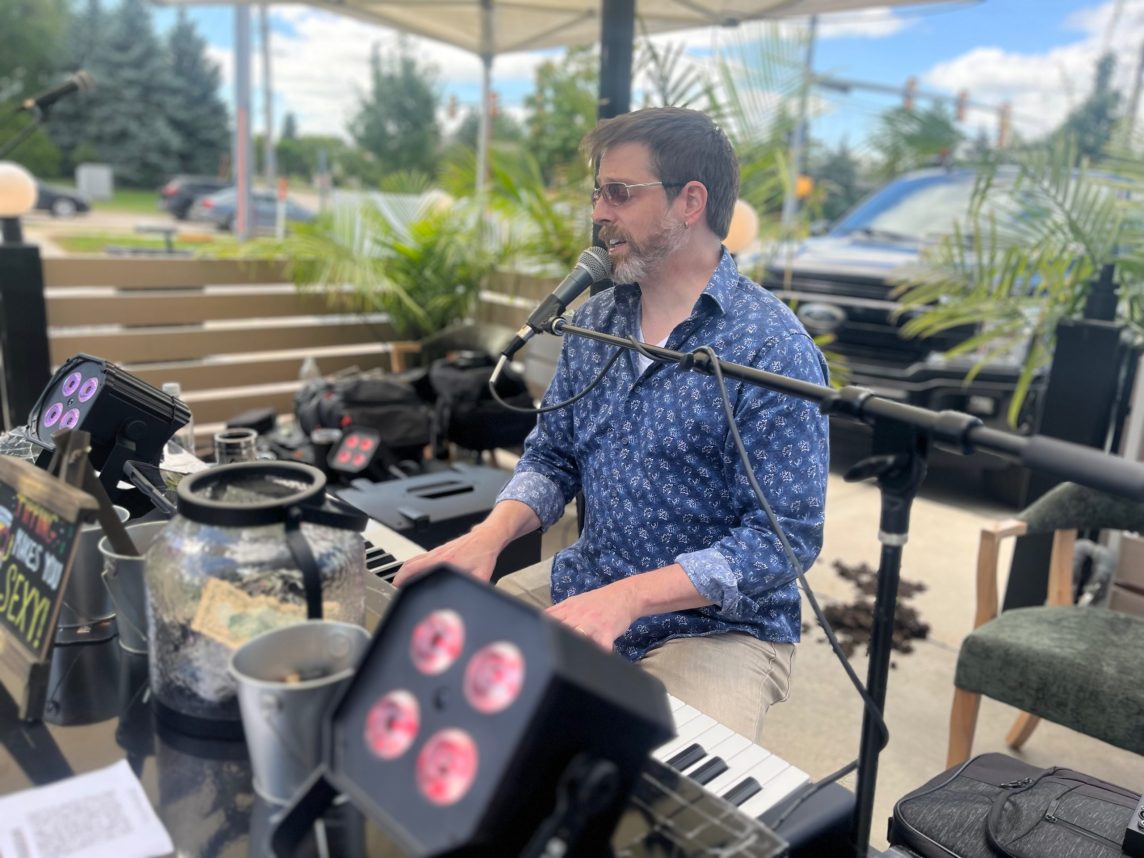
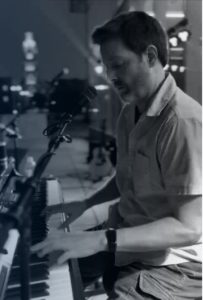
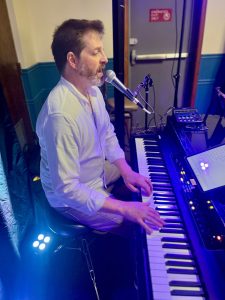
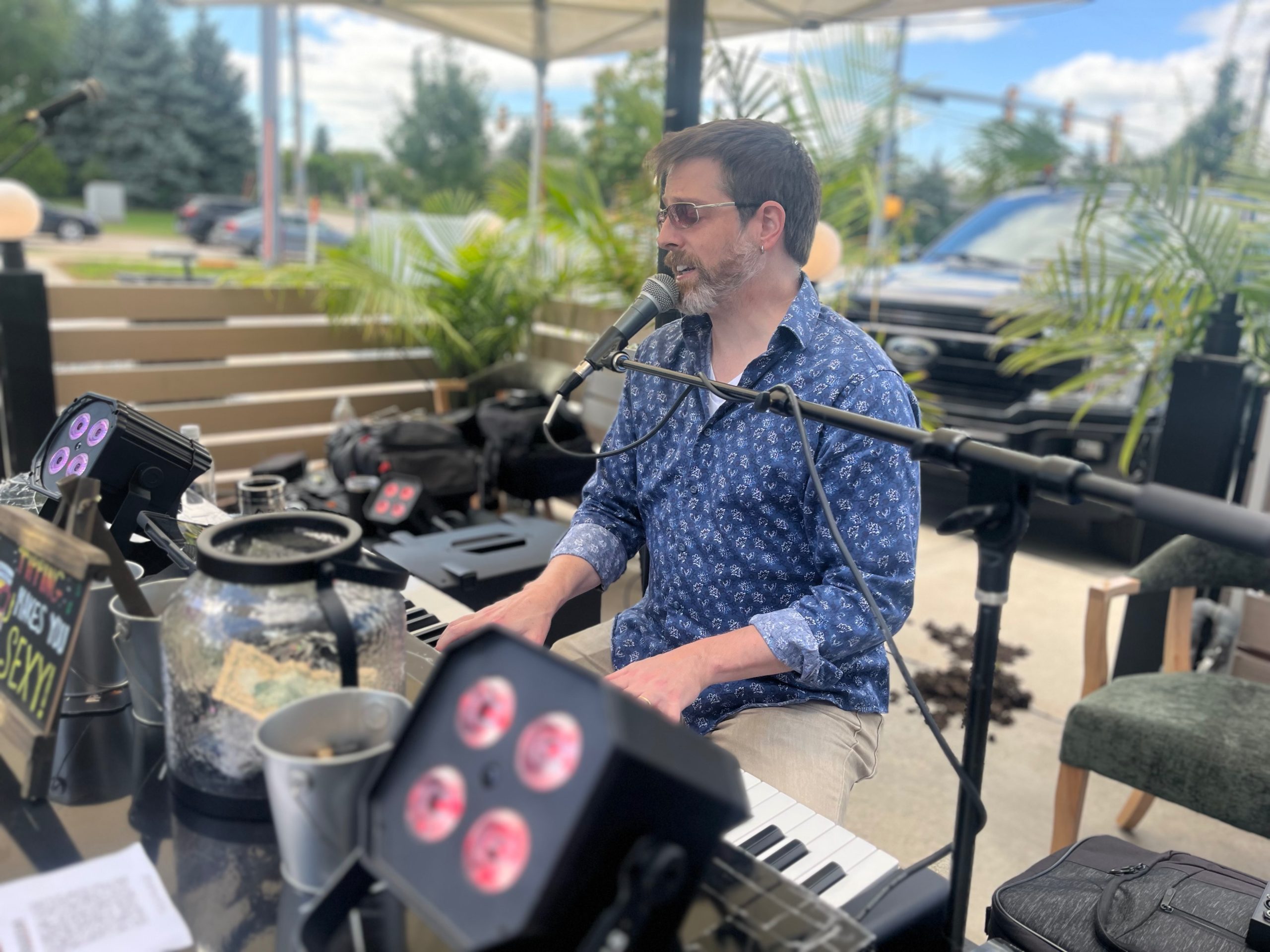
Greg Percifield playing a piano at Crescent City TapA highlight for me personally was receiving a special request for “Vienna” by Billy Joel. I love Billy Joel, and also performed, “My Life” and “New York State of Mind” that night. We wrapped up our planned set with Billy Joel’s timeless “Piano Man,” the audience enthusiastically sang along. Inspired by the high spirits, we received a hefty tip to keep the music flowing. We happily continued, choosing crowd-favorites “Brown Eyed Girl” and “Sweet Caroline” to maintain that energy, which is great for closing out a show.

It’s always rewarding to see familiar faces and friends in the audience, adding a personal touch to each performance. Additionally, it was great to meet some new staff members who contributed positively to the welcoming atmosphere. I even had a chance to reconnect with someone who had hired me for a solo backyard party event years ago. Hopefully, their next event will include both of us as Bell & Field!

Thanks again to everyone who joined us and made the evening special. We’re excited to return to Crescent City Tap on May 16. Mark your calendars—we can’t wait to share another wonderful evening filled with good friends, great music, and maybe even some more delicious wine!

‘She Used to Be Mine’ Magic: Sara Bareilles & Rufus Wainwright’s Masterful Kennedy Center Duet

When singer-songwriter Sara Bareilles welcomed fellow troubadour Rufus Wainwright on stage at the Kennedy Center to sing “She Used to Be Mine,” the result was nothing short of magical. This unique collaboration – part of Bareilles’ New Year’s Eve concert with the National Symphony Orchestra – became a viral sensation and an emotional high point of the night. Bareilles, a “pop icon, multi-faceted artist and activist,” and Wainwright, a “trailblazing power-tenor” with a genre-blending style, joined forces to reinvent the Waitress anthem​.

The performance captivated the sold-out concert hall and soon the internet, proving that when two master storytellers meet, sparks fly.

YouTube player

Setting the Stage: A Special Night at the Kennedy Center

This show took place on December 31, 2024, as part of PBS’s Next at the Kennedy Center series.​

The evening was a career-spanning celebration of Bareilles’ music, backed by the National Symphony Orchestra and featuring special guests. Rufus Wainwright was one of those guests, stepping into Bareilles’ world for a much-anticipated duet. Bareilles has seemingly done it all – from penning chart-topping pop hits to starring on Broadway – but even she had never performed an orchestral concert of her own music until this moment. Wainwright, an acclaimed singer-songwriter himself, was an inspired choice of partner for this song. In fact, Bareilles was a long-time admirer of his, she revealed, describing how a casual Instagram exchange led her to boldly invite him to sing with her – an invitation that “he said yes” to, much to her delight​. It was an unexpected pairing of two distinct artists, brought together by mutual respect and the promise of creating something special.

This was the first time I got to meet Rufus Wainwright. I have been a super fan of his since I was in my late teens,”

The song they chose could not have been more fitting. “She Used to Be Mine” is the soul-stirring ballad Bareilles wrote for the Broadway musical Waitress. It’s the emotional centerpiece of the show – a “critically acclaimed musical theater super-hit” as PBS describes it​ – known for reducing audiences to tears with its raw honesty. By performing it as a duet, Bareilles and Wainwright aimed to shed new light on the song’s emotion. The Kennedy Center audience, full of devoted fans, instantly understood they were about to witness a once-in-a-lifetime interpretation of a modern classic. Little did everyone know, the two singers had only met in person that week and – remarkably – only rehearsed the song once together before performing it live​. Perhaps that spontaneity added an extra edge of excitement; what unfolded on stage was a moment of pure musical synergy that felt both fresh and deeply assured.

Sara Bareilles – A Storyteller at the Piano

To appreciate this performance, it helps to know each artist’s background. Sara Bareilles is often praised for her storytelling in songwriting and her warm, powerhouse vocals. Breaking through with the 2007 hit “Love Song,” she built a career on piano-driven pop melodies that balance clever craft with confessional heart. Her style draws from pop, soul, and even folk influences, but above all, she has a theatrical streak – evident in the emotional arcs of her songs and her later foray into musical theater.

Career Highlights: Bareilles is a true multi-hyphenate. Some standout accomplishments include:

  • Chart-Topping Songs: Bareilles achieved multi-platinum success with singles like “Love Song” and “Brave,” showcasing her knack for catchy melody and relatable lyrics.
  • Broadway Composer & Star: She wrote the music and lyrics for the Broadway musical Waitress (2016) – earning a Tony nomination – and even took on the lead role herself in an acclaimed run​. In 2022, she wowed Broadway again as the Baker’s Wife in Into the Woods, for which her performance (and soaring vocals) earned rave reviews​.
  • Acting & Television: Bareilles co-created and starred in the comedy series Girls5eva and has appeared in live TV musicals, proving her versatility on screen as well as on stage.


Beyond the resume, Bareilles is beloved for her down-to-earth personality and authenticity. She often writes about self-doubt, hope, and empowerment with disarming honesty. (It’s no surprise she’s also an outspoken activist for causes like women’s rights and LGBTQ+ equality.) On stage, she radiates a generosity of spirit – the kind of performer who makes a concert hall feel intimate. All of these qualities shine through in “She Used to Be Mine,” a song Bareilles has called “a page out of my diary” in its deeply personal nature​.

Small wonder that with Bareilles at the helm, the Kennedy Center audience was prepared for an emotionally truthful performance.

Rufus Wainwright – The Trailblazing Troubadour

Rufus Wainwright, on the other hand, brings a different flavor of artistry. If Bareilles is a pop storyteller with a Broadway soul, Wainwright is often described as a baroque-pop or operatic troubadour – a singer-songwriter who fuses classical influences and theatrical flair into contemporary songwriting. He came up in the late ’90s as a critical darling, acclaimed for his lush melodies, poetic lyrics, and a voice that can be both tender and grand. Wainwright’s vocals are distinctive: a rich tenor with a sweeping range (PBS aptly calls him a “trailblazing power-tenor”​) that can crest into a delicate falsetto. There’s a dramatic, almost old-world cabaret quality to his performance style, which made him a fascinating complement to Bareilles on this song.

Career Highlights: Wainwright’s career has been marked by bold artistic ventures and widespread respect from his peers. For example:

  • Critically Acclaimed Albums: His early albums like Poses (2001) and Want One (2003) earned him a devoted following. Rolling Stone and other outlets praised his songcraft, and his song “Hallelujah” (a cover of Leonard Cohen’s classic) became widely known, introducing his voice to many new listeners.
  • Genre-Blending Projects: Wainwright has never been confined to pop/rock – he composed a full-length opera (Prima Donna, premiered in 2009) and famously recreated Judy Garland’s 1961 Carnegie Hall concert in a live tribute performance. These projects highlight his love of classical music and stage tradition, woven into his identity as a modern singer-songwriter.
  • Accolades and Influence: Fellow musicians hold Wainwright in high esteem. Even Elton John once hailed him as “the greatest songwriter on the planet”​ – high praise that underscores Wainwright’s songwriting prowess and unique voice in the music world. He’s a true artist’s artist, unafraid to take risks and chart his own path.


Personally, Rufus Wainwright is known as an expressive, candid performer. He was one of the first openly gay male artists to achieve mainstream success in pop, and he’s used that platform to advocate for LGBTQ+ representation. On stage, he often dresses flamboyantly and engages audiences with witty banter and emotional vulnerability in equal measure. All of that distinctive character – the romance, the drama, the vocal agility – he brought with him to the Kennedy Center for this duet. Bareilles joked that her criteria for inviting guests was basically “who’s a great hang,” and Wainwright fits the bill.​

More importantly, she knew his artistic sensibilities and emotive voice could meet her song on equal footing. As Bareilles said, “I was kind of shocked [he agreed], but over the moon” to have him join​. With Wainwright on board, her beloved ballad was about to get a gorgeous new twist.

How and Why This Collaboration Happened

So how did these two end up singing “She Used to Be Mine” together? The seed was planted by fate (and social media). In a fun anecdote, Bareilles shared that she once posted a video of herself wearing a Rufus Wainwright T-shirt – which caught Wainwright’s attention online.​

The two exchanged messages, and Bareilles half-jokingly dared him to let her collaborate someday. When she began planning her Kennedy Center orchestral concerts, she saw the perfect opportunity and invited him as a guest. “He said yes,” Bareilles recounted, still sounding a bit amazed at her luck​. It was a fan’s dream come true for her – getting to sing with an artist she idolized – and Wainwright himself seemed excited to step into a new musical environment with Bareilles and the NSO.

Choosing “She Used to Be Mine” as their duet was a no-brainer. This song is one of Sara Bareilles’ signature pieces – the emotional climax of Waitress – and arguably her most famous ballad. In the musical, it’s performed solo by the lead character Jenna, a woman lamenting the loss of her younger self and dreams. Bareilles, however, has often noted how personal the song is to her own life, despite writing it for a fictional character. (“The circumstances are different, but [Jenna’s] personality… that feels like a page out of my diary,” she’s said​.)

Because the song already carries so much of Bareilles’ heart, sharing the vocals with another singer could unlock even more depth.

Why Rufus Wainwright for this song? For one, his vocal style is ideally suited to heartfelt, melodic material. Wainwright can deliver sincerity without shying away from drama – and “She Used to Be Mine” lives in that sweet spot of quiet introspection swelling into catharsis. There’s also a thematic resonance: while the song is written from a woman’s perspective, its core sentiment is universal – reflecting on who you used to be versus who you’ve become. Wainwright, as an openly gay man and a new father (at the time), likely found his own connection to the song’s message of love and longing for one’s past self. By singing it as a duet, they essentially turned the song into a conversation or a shared confession, almost as if two halves of the same soul were speaking. Bareilles took the invitation further by arranging to have the full National Symphony Orchestra accompany them, giving the piece a sweeping grandeur.

It’s worth noting that this Kennedy Center concert was not just a one-off gig; it was filmed for television and meant to be a celebration of Bareilles’ artistry. The duet with Wainwright served as a highlight of that celebration, “a tribute to Bareilles’ contributions to music and theater,” as one outlet described the event.​

In other words, Bareilles was curating moments that reflected her musical journey – and “She Used to Be Mine” is arguably the crown jewel of her songbook. Having Rufus Wainwright join her on that song showed her confidence in re-imagining her biggest hit, and her generosity in sharing its spotlight. It also symbolized how far the song had traveled beyond its origins: from a Broadway stage to a grand concert hall, embraced by another acclaimed songwriter in duet.

Musical Chemistry Onstage: Why the Performance Soared

From the moment the first piano notes and orchestral strings of “She Used to Be Mine” sounded, it was clear this performance was going to be special. Bareilles began the song in her signature style – seated at the piano, voice quiet and brimming with emotion on the opening lines. Wainwright stood at her side with a microphone, entering subtly on harmony in the first chorus. Though the duet arrangement was simple, it was profoundly effective: they traded lines occasionally, but mostly Wainwright layered his voice around Bareilles’, amplifying the feeling rather than altering the melody’s story. His vocal timbre, with that slight vibrato and ache, wrapped around her pure tone like a delicate veil. In the verses, he’d often hold back, letting her voice carry the narrative, then join on key phrases (“she is messy but she’s kind… she is lonely most of the time“) to reinforce them like an echo of empathy.

As the song progressed, you could sense Bareilles and Wainwright finding a groove – pretty astonishing given they’d only just met and had minimal rehearsal. In fact, according to one account Wainwright told the crowd beforehand that it was literally their first time performing together after just a single run-through.​

Yet their artistic chemistry was immediate. They frequently locked eyes or smiled in mutual understanding of a poignant lyric. There was a palpable respect between them; neither one tried to outshine the other. Instead, they listened and responded in the moment – the hallmark of seasoned musicianship. Critics later hailed the duet as a standout moment of the evening​, noting how Bareilles’ heartfelt delivery “was matched by Wainwright’s ethereal vocal quality”​. It felt like two storytellers truly in conversation, merging their voices into one storytelling force.

Musically, the arrangement built slowly to an emotional peak. The National Symphony Orchestra, under conductor Steven Reineke, added new colors to the song’s usual piano-only backdrop. Subtle woodwinds and strings swelled in the second verse, and by the bridge the orchestra was adding weight to every surge of feeling. The dynamics were exquisite: Bareilles would crescendo from a near-whisper to a full belt, and Wainwright would either support her with a low harmony or soar above her with a high counter-melody. One especially breathtaking choice was in the final chorus – Bareilles belted the lyric “she used to be mine” with all the ache and strength in her soul, holding a climactic note, and at that very moment Wainwright slid into a high falsetto harmony above her, sustaining the word “mine.” The effect was spine-tingling. His voice floated like a ghost of Jenna’s past self, augmenting Bareilles’ passionate cry with a haunting parallel emotion. It’s a brief moment, but it gives goosebumps – you can feel the emotion as the two voices entwine. (For a taste of this chill-inducing climax, watch around 3:20 in the performance video to witness that harmony.)

Beyond the vocal techniques, what made the performance so masterful was its emotional transparency. Both artists committed 100% to the lyric. Bareilles, as the song’s writer, delivered every line as if confessing it anew. Wainwright, coming into a song he didn’t write, nevertheless gave himself over to its story – you can see him close his eyes on certain lines, almost becoming the character or perhaps channeling his own life experiences through the words. The authenticity of their interpretation was unmistakable. As one reviewer raved, “This wasn’t just a song; it was pure, heart-wrenching storytelling, packed with raw vulnerability and soul-shaking harmonies.”

Indeed, the duet transcended a typical concert number; it felt like a piece of theater, a shared emotional journey that the audience was lucky enough to witness.

When the last notes faded, there was a brief moment of awed silence before the Kennedy Center crowd leapt to their feet in a fervent standing ovation. You can imagine people blinking back tears. Bareilles and Wainwright exchanged an embraced smile – a look of we did something special here – as the audience applauded wildly. On social media, clips of the performance quickly made the rounds, garnering astonished comments from casual viewers and fellow musicians alike. (The PBS video has since racked up hundreds of thousands of views, spreading the moment far beyond the concert hall.) It’s rare that a live duet lives up to the lofty expectations of fans, but this one did that and more. One fan’s reaction perhaps said it best: “This is my favorite duet I have ever heard in my whole life – a masterful piece of art.”

Such was the impact of Bareilles and Wainwright’s combined talents.

The Song’s Resonance: Why “She Used to Be Mine” Hits Home

At the heart of this performance’s power is, of course, the song “She Used to Be Mine” itself. Since its debut in 2015, this ballad has taken on a life far beyond the Waitress musical. It has become an anthem of self-reflection and empathy, embraced by a broad audience. The lyrics describe a woman recognizing how much she’s changed – “She’s imperfect but she tries… She is gone but she used to be mine.” It’s a mournful apology and a love song to one’s own former self. You don’t have to be a pie-baking waitress or even a woman to feel the gut punch of those words. We all have moments in life where we look in the mirror and wonder where the hopeful version of us went. Bareilles captured that feeling so beautifully that the song has resonated across generations and backgrounds. “I think everybody can relate to the idea that no matter where you ended up, you ended up different than you thought you would be,” Bareilles has said, explaining why the song connects, “We all have to reconcile the differences between who you thought you would become and who you actually ended up being.”

I think everybody can relate to the idea that no matter where you ended up, you ended up different than you thought you would be.

That universal truth, wrapped in gentle poetry and soulful melody, is what gives “She Used to Be Mine” its enduring impact.

Because of this relatability, the song has inspired countless cover versions. From Broadway actors performing it in auditions, to pop stars like Kelly Clarkson belting it on TV, to aspiring singers on YouTube – everyone wants to sing this song. In fact, by 2019 Bareilles noted that “She Used To Be Mine” had already sparked “thousands of internet covers” and sing-alongs, becoming the standout number that audiences request most​.

It’s rare for a theater song to break into the pop culture consciousness like that, but this one did. There’s just something healing in it. It starts as a sad solo piano ballad, almost like a diary entry, but by the end it swells into a triumphant declaration of dignity and self-worth, even in brokenness. As a listener, it’s hard not to feel seen and comforted by that journey.

Bareilles and Wainwright’s duet amplified all those feelings. By turning the solo into a shared experience, they almost made it about community – two people (and by extension the whole audience) collectively acknowledging the pain of losing oneself and the hope of finding oneself again. The orchestral arrangement added further emotional weight; those sweeping violins behind the line “for the girl that I knew” made it even more cinematic and tear-jerking. If the song normally feels like a personal prayer, this rendition felt like a universal anthem. Many viewers commented that it gave them chills or moved them to tears, even if they’d heard the song many times before. That speaks to the fresh perspective the duet brought. Wainwright’s presence introduced a new texture and a sort of dialogue, while Bareilles’ unwavering sincerity kept it grounded.

Another reason the song resonates so deeply is Bareilles’ talent for balancing darkness with light. “She Used to Be Mine” doesn’t shy away from regret, loneliness, or disappointment – “she’s not what I asked for” – but it ultimately brims with compassion. It’s about learning to love the person you are, despite the scars of life. In the Kennedy Center performance, when Bareilles and Wainwright reached the final lyric, “to be mine,” there was an overwhelming sense of acceptance, even joy. Two friends (new friends, at that!) were singing out a hard truth and simultaneously lifting each other up through it. It was a potent reminder of why we love music: it allows us to feel complex emotions in a safe, shared space.

A Masterclass in Musical Storytelling

sara bareilles and rufus wainwright share stageIn retrospect, the Sara Bareilles–Rufus Wainwright duet of “She Used to Be Mine” stands as a shining example of what live music can achieve at its best. It combined virtuosic skill (two exceptional vocalists at the top of their game) with emotional storytelling of the highest order. As one music publication aptly summarized, the performance was “a masterclass in emotional storytelling through song.”

Both artists brought their unique strengths – Bareilles’ crystal-clear voice and heartfelt urgency, Wainwright’s soaring range and dramatic flair – and in blending them, created something even greater than the sum of its parts. The collaboration came about almost by chance, but it felt predestined once you saw it: here were two very different singer-songwriters finding common ground in a song that speaks to the soul.

The Kennedy Center setting and orchestral backing gave the moment a grandiosity, yet Bareilles and Wainwright managed to make a large hall feel hushed and intimate, as if we were eavesdropping on a personal confession. The artistic chemistry and trust between them, despite barely knowing each other, was remarkable. You could tell they were generous performers, each one truly listening and reacting to the other. That generosity made the duet feel harmonious in more than just the musical sense – it was two human beings connecting through art.

In the end, why do we keep talking about this performance? Because it reminded everyone who watched it of the transformative power of music. A great song can carry so much meaning, and when interpreted by great artists in harmony, it can hit with almost overwhelming force. “She Used to Be Mine” already resonated with so many people; seeing Sara Bareilles and Rufus Wainwright pour their hearts into it together was a gift to all of us who have ever felt like the person we see in the mirror is a far cry from who we once were. The performance was melancholy yet hopeful, grand yet deeply personal. It was the kind of musical moment that gives you chills in the moment and stays with you long after.

As the final ovation died down that night, one thing was clear: this duet had become an unforgettable piece of music history for fans of both artists. “Celebrating Bareilles’ impact on music and theater, this moment proved just how timeless and powerful ‘She Used to Be Mine’ really is,” one publication wrote in praise.​

Indeed, timeless and powerful are the perfect words. This song, and this performance of it, will continue to resonate for years to come – a masterful meeting of minds and voices that reminds us of who we used to be, who we are, and why we love music in the first place.

Bell & Field Live at Tuggers – June 15

Celebrate Father’s Day with a relaxing afternoon filled with great food, heartfelt melodies, and cherished moments! Join us on Sunday, June 15, 2025, at Tuggers in Port Byron, IL, from Noon to 3:00 PM, for a special Father’s Day event featuring the soulful acoustic sounds of Bell & Field.

Event Details

  • When: Sunday, June 15, Noon–3:00 PM
  • Where: Tuggers – 201 N Main St, Port Byron, IL 61275
  • Who: Live acoustic performance by the acclaimed duo, Bell & Field
  • What to Expect: Celebrate Dad with classic hits, smooth harmonies, and a delicious seasonal lunch menu in a relaxed and inviting atmosphere.
  • Website: Tuggers

Bell & Field: Professional Acoustic DuoAbout Bell & Field:


Bell & Field are celebrated for their smooth harmonies and an impressive repertoire that spans decades, creating an intimate and inviting atmosphere. Their performance is designed to complement the easygoing charm of Tuggers, offering an acoustic set that enhances your midday dining experience.

The Venue: Celebrate Father’s Day at Tuggers

Make Father’s Day memorable at Tuggers, Port Byron’s favorite gathering spot. Known for its inviting atmosphere, delicious seasonal dishes, and warm hospitality, Tuggers perfectly captures the spirit of community and celebration. Choose indoor seating for a cozy meal or relax outdoors while enjoying vibrant tunes—whichever you choose, it’s sure to be a Father’s Day to remember!

Join Us for a Father’s Day Celebration

Bring Dad, family, and friends together for an afternoon filled with live acoustic music, fantastic food, and the warmth of community spirit. Share this special occasion with Bell & Field at Tuggers—a Father’s Day experience he’ll cherish.

What song would your dad love to hear on Father’s Day? Let us know below!

Cheers to making Father’s Day special with great food, unforgettable music, and lasting memories at Tuggers!

Bell & Field Live at The V’ue – May 23

The V'ue Clinton Iowa speakeasy club live music stage

Ready to kick off your spring evenings with exceptional live music and a chic atmosphere? On May 23, join us at The V’ue in Clinton, IA, for a captivating night that pairs the soulful stylings of Bell & Field with a refined ambience that only this unique venue can offer. The show starts at 7:00 PM and winds down by 9:00 PM—perfect for an intimate musical escape.

Event Details

  • When: Friday, May 23, 7:00–9:00 PM
  • Where: The V’ue – 137 5th Ave S, Clinton, IA 52732
  • Who: Live acoustic performance by the acclaimed duo, Bell & Field
  • What to Expect: An elegant blend of timeless acoustic tunes, a relaxed atmosphere, and a venue that reflects Clinton’s vibrant spirit. Whether you’re winding down after a long day or setting the mood for your night out, this event promises charm and quality entertainment.
  • Website: The V’ue


Bell & Field: Professional Acoustic DuoAbout Bell & Field:

Bell & Field have earned accolades for their harmonious blend and timeless repertoire. Their intimate, acoustic performances are crafted to create a warm, inviting atmosphere—ideal for those moments when music and ambiance come together to create magic.

The Venue: The V’ue & Clinton Charm

Step into The V’ue, a modern and stylish venue right in the heart of Clinton, IA. Known for its contemporary design, ambient lighting, and vibrant energy, The V’ue offers an inviting setting that perfectly complements the soulful tunes of Bell & Field. Located on 5th Ave South, this hotspot embodies the creative and dynamic pulse of Clinton, making it the ideal backdrop for a night of unforgettable live music.

Join Us for a Night to Remember

Gather your friends and be part of an evening where exceptional sound meets urban sophistication. Whether you’re a longtime fan of Bell & Field or seeking a new experience in a venue that celebrates the artistic spirit of Clinton, this night is set to impress. What song or moment are you most excited about? Share your thoughts in the comments below!

Cheers to an evening of soulful tunes, stylish surroundings, and memories in the making at The V’ue!

From Stage to Studio: My Honest Journey with Gigging Keyboards

Hi, I’m Greg—52 years old, with a jazz piano degree. I’ve spent most of my adult life gigging. For ten memorable years, I performed in the high-energy world of dueling pianos, initially drawn by the excitement and financial perks. However, my naturally quiet and shy personality eventually led me to seek a more sustainable, authentic musical experience. Today, I enjoy calmer, more personally fulfilling gigs with my duo band, Bell & Field.

If you’re a gigging musician struggling to find the perfect balance between sound, portability, and playability, I’ve been there—and here’s what I’ve learned.

Finding the Right Gear: A Crucial Balance

Choosing gear has always been crucial for me. Balancing sound quality, portability, and playability became my obsession.

Initially, I thought I needed two keyboards:

  • One to stay permanently set up at home.
  • Another dedicated exclusively to gigging, reducing the stress of constant transport.

However, after extensive trial and error, I ultimately realized I needed just one keyboard that could excel in both areas. Here’s my journey through various setups:

Roland FP-90X: My Home Studio Powerhouse

I initially chose the Roland FP-90X for its advanced “Pure Acoustic Modeling,” promising superior realism over sampled sounds. Unfortunately, while the action was unparalleled, I wasn’t convinced by the modeled tone.

  • ✅ Exceptional key action, unmatched by any other keyboard I’ve played.
  • ✅ Powerful internal speakers (60 watts) that provide rich, full sound.
  • ✅ Intuitive sliders make live adjustments effortless.
  • ✅ Gorgeous and easy controls.
  • ⚠️ At 52 lbs, transporting this keyboard became cumbersome—especially up and down stairs.
  • ⚠️ Slight “toy piano” undertone remained despite extensive EQ tweaking.

Due to its weight, price tag ($2,000), and tonal limitations, the FP-90X might have stayed safely in my home studio, had I not found a better alternative.  I seriously considered the Yamaha P-525 to be that replacement, but it too, was heavy and bulky for me to carry up and down the stairs all the time.  If I were to have two keyboards, I knew that one would stay in the house and the other in the car.  While that was initially appealing, the summer heat and winter cold would put unnecessary stress on the electronics.

YouTube player

Kawai ES120: A Temporary Gigging Companion

During my search, the Kawai ES120 briefly became my gigging keyboard due to its practicality and portability:

  • ✅ Lightweight and extremely easy to transport.
  • ✅ Practical keyboard action for its weight class.
  • ✅ Internal speakers adequate for monitoring and quiet practice.
  • ✅ Bluetooth connectivity for streaming pre-show playlists—a great bonus!
  • ⚠️ Included sustain pedal is flimsy—I recommend upgrading to Kawai’s sturdier F-10H ($69).

However, after purchasing the ES120, I still wasn’t fully satisfied. The portability was great, but the sound didn’t fulfill my needs on stage. Or to be perfectly blunt, the sound had the lowest quality compared with all the models I mention in this post.  That is not to say it was poor.  It may have even out-performed a Yamaha P-255 (it’s a tight race), but I had my sights on something more realistic to my tastes and experiences.

Yamaha MX88 & Casio Privia PX-560M: Valuable Lessons Learned

Previous keyboards taught me crucial lessons about my priorities:

  • Yamaha MX88: Phenomenal sampled sounds with realistic piano tones but lacked internal speakers, had mediocre action, and was just slightly too bulky (30.6 lbs). Great keyboard!
  • Casio Privia PX-560M: Great portability and decent action but eventually some keys were wearing out and it is now discontinued. I loved this as a gigging companion.  Could I do even better?

Enter The Yamaha CK88: My Ultimate Gigging Solution

After all these trials, I found my perfect match—the Yamaha CK88. It delivers exactly what I need:

  • ✅ Phenomenal piano, electric piano, and organ sounds—exactly the tonal quality I sought.
  • ✅ Good, responsive key action—comfortable enough for extensive gigging.
  • ✅ Highly portable and practical for gigging. Heavier than the Casio Privia and Kawai, but lighter than the other mentioned models.
  • ✅ Internal speakers, though modest, are sufficient for home practice without extra setup.  Sounds incredible through external speakers!
  • ✅ A significant cost-saving solution compared to maintaining two keyboards.
  • ✅ It even has the practical Bluetooth technology that I enjoy for streaming music pre-show or during a short break.

Yes, the internal speakers aren’t as robust as the FP-90X, but that’s a small compromise easily solved by external amplification during gigs. Play this through external speakers and you’ll soon understand why this keyboard is a winner!

YouTube player

A Great Experience At The Guitar Center In Davenport

On top of finally finding an amazing keyboard, I had a fantastic experience purchasing the CK88 at Guitar Center in Davenport. I often feel skeptical about Guitar Center, as previous experiences weren’t always positive. However, Devon changed my perspective completely. Although he’s not a keyboard player, he’s an experienced musician with attention to detail. He authentically understood my needs, genuinely supported my decision, and provided an excellent buying experience. I appreciated our conversation about musical backgrounds, and it was a true pleasure to meet him. Devon is my go-to person now—he’s the real deal! Even Tom had a similarly positive interaction with Devon, solidifying my trust. Be sure to ask for Devon if visiting the Guitar Center in Davenport.  He is the sales manager.

Returning gear isn’t fun, but sometimes it’s necessary—especially when stores don’t have your desired product on hand to try out in advance. Thankfully, this experience was great, and I’m thrilled to have settled confidently on the Yamaha CK88.

My Gigging Essentials: Piano Shells & Professional Setup

My gear doesn’t end with my keyboard.  To elevate my stage presentation, I use a piano shell from Keyhole and at home I keep a beautifully designed prop-top from Presto Piano—a sister company to Felix and Fingers Dueling Pianos, where I also serve as CTO. Speaking of which—I built the websites for Felix and Fingers, Presto Piano (check those shells out!), and Bell & Field (where you’re reading this post!). Hope you like my work! 😊

My current lighting setup includes:

  • Chauvet Bluetooth Products: 4 Chauvet uplights and 4 Chauvet 4-bars, controlled through the BT Air app.
  • Carefully crafted lighting scenes that complement our music with soft, expressive visuals.
  • A black backdrop curtain to enhance stage aesthetics.

We take pride in our professional setup—no corners cut—and it’s a genuine pleasure performing in our thoughtfully prepared mobile “office” every week.

My Dream Keyboard: Could It Exist?

My ideal keyboard would feature:

  • Roland FP-90X’s unmatched action
  • Yamaha MX88’s authentic piano realism
  • Casio Privia PX-560M’s lightweight portability

Come to think of it, I am pretty darn close with the Yamaha CK88!  I’m looking forward to getting to know this keyboard even more.

Final Thoughts for Fellow Musicians

Choosing the right gear is always a balancing act. Prioritize what makes your performances enjoyable and practical:

  • Never underestimate portability.
  • Don’t compromise too much on sound realism.
  • Always value the feel of your keyboard action.

Stay true to what matters most to you, and don’t be afraid to try, return, and refine until you get it right!

I’ll update this post soon once Tom shares his own experiences with his recent guitar gear adventures.

I’d love to hear from you!

What’s your current gigging setup? Any favorite gear recommendations or surprising discoveries? Share your thoughts in the comments below!

Bell & Field Live at Loyal Order of Moose – August 09


Are you ready to make your Saturday unforgettable? Mark your calendars for August 9, 2025, and join us at the historic Loyal Order of Moose in Joliet, IL for an enchanting night of live music and a special wine tasting experience. The event runs from 6:00 – 9:00 PM, providing the perfect ambiance to enjoy the smooth sounds of Bell & Field while exploring hand-selected wines that complement the evening’s vibe.

Event Details

  • When: Saturday, August 9, 2025, 6:00–9:00 PM
  • Where: Loyal Order of Moose – 25 Springfield Ave, Joliet, IL 60435
  • Who: Live acoustic performance by the talented duo, Bell & Field
  • What to Expect: A soulful mix of classic tunes, carefully paired wines, and an intimate setting that showcases the unique blend of Joliet’s urban energy with a touch of nostalgic charm.
  • Website: Loyal Order of Moose

Bell & Field: Professional Acoustic DuoAbout Bell & Field:


Bell & Field are celebrated for their seamless harmonies and timeless repertoire that spans several decades. Their acoustic performance is designed to create a warm, immersive experience that pairs beautifully with a curated selection of wines, making each performance a heartfelt journey through sound and flavor.

The Venue: Loyal Order of Moose & Joliet Heritage

Step into the Loyal Order of Moose—a venue steeped in history and community spirit. Located in downtown Joliet, this iconic venue has been a hub for cultural events and local gatherings. Its blend of vintage charm and modern amenities sets the stage for an evening that’s both relaxed and engaging. Whether you’re a longtime resident or a curious visitor, the Loyal Order of Moose offers a welcoming atmosphere where art, history, and community converge.

Join Us for a Night to Remember

Gather your friends and make your way to an evening filled with live music, delicious wines, and unforgettable memories. Whether you’re a devoted fan of Bell & Field or eager to discover a new wine pairing, this event promises a perfect fusion of sound, taste, and local flair. Which classic tune or exotic wine are you most excited to experience? Let us know in the comments below!

Here’s to a dazzling night of live music, delightful sips, and the rich heritage of Joliet at the Loyal Order of Moose!

Bell & Field: The Ideal Live Acoustic Music for Fine Dining Experiences

Music for Fine Dining Experiences Includes Mini Grand Piano ShellElevate Your Fine Dining Experience with Bell & Field

When planning the perfect evening at a fine dining establishment, every detail matters—the food, the ambiance, and especially the music. Bell & Field is a live acoustic duo uniquely suited to elevate fine dining experiences, transforming a great meal into an unforgettable evening.

Timeless Music, Elegant Ambiance

Bell & Field specializes in nostalgic, relaxing music from the ’60s through the ’90s, carefully curated to complement sophisticated dining atmospheres. Their repertoire features timeless artists such as The Beatles, Paul Simon, Frank Sinatra, Van Morrison, and many more.

This ensures each song resonates beautifully with diners of all ages. Unlike traditional bar bands, Bell & Field emphasizes subtlety and refinement, offering music that is family-appropriate, intriguing, and elegant.

Designed for Comfort and Clarity

Bell & Field’s appeal lies in their meticulously crafted presentation:

  • Soft Lighting: Gentle, inviting illumination designed specifically to enhance comfort and foster relaxed conversations.
  • Bose Audio Technology: Patented sound systems delivering crystal-clear audio at comfortable volumes, allowing diners to enjoy conversations and savor their meals without interruption.
  • Mini Grand Piano Shell: An elegant, visually appealing centerpiece that elevates the performance’s sophistication, perfectly matching the refined atmosphere of upscale dining establishments.

The Perfect Balance of Engagement

Understanding the delicate balance between entertainment and ambiance, Bell & Field maintains subtle audience interaction through occasional playful banter and thoughtfully selected song dedications.

This provides just enough engagement to amuse and delight guests without overpowering the dining experience. Bell & Field proudly enhances the dining atmosphere, seamlessly complementing any upscale restaurant setting.

Trusted by Premier Establishments

Bell & Field regularly performs at renowned venues like Craft On Seminary Street in Galesburg, IL, a restaurant celebrated for exceptional cuisine and refined ambiance. Craft’s dedication to “simple and honest cooking” aligns beautifully with Bell & Field’s approach to providing sophisticated yet unobtrusive musical accompaniment.

Restaurants frequently praise Bell & Field’s ability to keep patrons engaged, relaxed, and lingering longer, enhancing both dining experiences and the restaurant’s atmosphere. While always accommodating song requests, Bell & Field prioritizes maintaining the refined and pleasant ambiance integral to fine dining.

Book Bell & Field for Your Restaurant

If you manage or own a fine dining establishment looking to elevate your guests’ experiences, Bell & Field offers the perfect blend of tasteful music, subtle charm, and professional presentation.

For booking inquiries or more information, please visit our booking page.

We recommend reaching out in advance, as our schedule fills quickly.

Bell & Field Live at Summertime Market at Songbird Lane – June 21


songbird lane antiques cambridgeReady to kick off a vibrant summer day! On June 21, join us at Summertime Market at Songbird Lane in Cambridge, IL, for an extraordinary mid-morning to early afternoon event. Experience not only the allure of timeless treasures and local history but also the soulful acoustic sounds of Bell & Field. The overall event runs from 9:00 AM to 3:00 PM, with Bell & Field captivating the crowd during their performance slot from 11:00 AM to 1:00 PM.

Event Details

  • When: Saturday, June 21, 9:00 AM – 3:00 PM (Performance by Bell & Field: 11:00 AM – 1:00 PM)
  • Where: Songbird Lane Antiques – 16870 N 1100th Ave, Cambridge, IL 61238-9315
  • Who: Enjoy a live acoustic performance by the acclaimed duo, Bell & Field
  • What to Expect: A fusion of classic melodies, a relaxed antique browsing experience, and the charm of Cambridge’s local culture amidst beautiful collectible pieces.
  • Website: Songbird Lane Antiques


Bell & Field: Professional Acoustic DuoAbout Bell & Field:

Bell & Field continue to redefine live acoustic performances with their seamless harmonies and genuine stage presence. Their sets, ranging from nostalgic classics to soulful contemporary tunes, provide the perfect soundtrack to a day spent discovering one-of-a-kind antiques and engaging with a community that cherishes history and art.

The Venue: Songbird Lane Antiques & Cambridge Charm

Step into Summertime Market at Songbird Lane, a treasure trove of vintage finds and curated collectibles nestled in the heart of Cambridge, Illinois. With its warm, inviting atmosphere and meticulously arranged exhibits, the venue is celebrated for both its historical significance and its ever-changing array of unique items. Whether you’re an antique enthusiast or a first-time visitor, the venue’s timeless elegance and the surrounding small-town charm promise an enriching experience.

Join Us for a Day to Remember

Gather your friends and family for an event that blends live music with the joy of exploration. Whether you’re eager to revel in Bell & Field’s special acoustic set or to delve into the distinctive collections at Songbird Lane Antiques, this day-long event is set to delight all your senses. Which vintage collectible or classic tune are you excited to discover? Share your thoughts in the comments below!

Raise a toast to a memorable day filled with soulful music, antique wonders, and the unique spirit of Cambridge!

Bell & Field Live at Market Alley Wines – May 03

market alley winesReady to elevate your evening? On Saturday, May 3, 2025, join us at Market Alley Wines in Monmouth, IL, for an unforgettable night that pairs the smooth acoustics of Bell & Field with an exclusive wine tasting experience! The event begins at 6:00 PM and concludes by 9:00 PM, promising a relaxed vibe with exceptional sips and soulful tunes.

Event Details

  • When: Saturday, May 3, 2025, 5:00–7:00 PM
  • Where: Market Alley Wines – 59 Public Square, Monmouth, IL 61462
  • Who: Live acoustic performance by the acclaimed duo, Bell & Field
  • What to Expect: An intimate evening featuring classic tunes, handcrafted wines, and an exclusive tasting event that highlights the distinct flavors and charm of Market Alley Wines.
  • Website: Market Alley Wines

Bell & Field: Professional Acoustic DuoAbout Bell & Field:


Bell & Field are celebrated for their warm harmonies and timeless repertoire, spanning the decades from the ’60s to the ’90s. Their live acoustic performance creates an inviting and intimate atmosphere—perfect for savoring the exquisite wines and engaging company at Market Alley Wines.

The Venue: Market Alley Wines & Monmouth Magic

Step into Market Alley Wines, a hub of contemporary charm nestled within historic Monmouth. Known for its curated selection of boutique wines and friendly ambiance, this venue offers both indoor and outdoor seating that captures the small-town spirit with a modern twist. Monmouth’s vibrant community and rich heritage come together at Market Alley Wines, making it the ideal setting for an evening of refined taste and soulful music.

Join Us for a Night to Remember

Bring your friends and immerse yourself in a night where live music meets fine wine. Whether you’re a devoted fan of Bell & Field or eager to explore Market Alley Wines’ exclusive tasting experience, this event promises an impeccable blend of art, flavor, and community. Which wine varietal or classic tune are you most excited to experience? Share your thoughts in the comments below!

Cheers to an enchanting night of live music, delightful sips, and memories that will last a lifetime at Market Alley Wines!

Why Are People Comparing Benson Boone to Freddie Mercury?

A rising pop sensation and a legendary rock icon might seem unlikely companions in a musical conversation. Yet, fans and media alike have recently started mentioning Benson Boone and Freddie Mercury in the same breath. Benson Boone, the 22-year-old pop artist known for viral hits and an unforgettable 2025 Grammy performance, has stirred conversations about whether he could become “the next Freddie Mercury.”

Of course, Mercury—Queen’s iconic frontman—remains celebrated for his remarkable vocals, electrifying presence, and timeless songs. But why exactly has Benson Boone sparked these comparisons, and what do they reveal about both artists?

YouTube player

Benson Boone vs. Freddie Mercury: A Quick Background

Who is Benson Boone?

Benson Boone rose to fame through TikTok and a brief stint on American Idol, quickly signing with a major record label. His hit singles, including “Ghost Town,” “In the Stars,” and particularly “Beautiful Things” (which peaked at No.2 on the Billboard Hot 100), have earned him billions of streams and global recognition. His Grammy-nominated debut marked Boone as a breakout star blending emotional storytelling with contemporary pop melodies.

Who was Freddie Mercury?

Freddie Mercury (1946–1991) was the legendary vocalist for the British rock band Queen. Renowned for his four-octave vocal range, theatrical performances, and songwriting mastery (with classics like “Bohemian Rhapsody” and “We Are The Champions”), Mercury redefined the role of a rock frontman. His flamboyant style, commanding stage presence, and lasting cultural impact cemented his status as one of music’s greatest icons.

Vocal Power: Boone and Mercury Compared

Both artists share impressive vocal abilities. Mercury’s voice is legendary—his expansive four-octave range and unmatched theatricality allowed him to move seamlessly from powerful rock anthems to delicate ballads. Benson Boone, though early in his career, has shown vocal versatility with a wide range, from gentle falsettos to powerful, sustained high notes. Boone’s emotional intensity, especially in live performances of songs like “In the Stars”, draws vocal comparisons to Mercury—not necessarily for similarity in sound, but in their shared ability to captivate and thrill audiences.

However, their musical styles diverge significantly. Mercury’s eclectic rock and operatic experimentation contrast sharply with Boone’s contemporary pop sensibilities and themes of love, heartbreak, and personal growth.

Stage Presence: Charisma Across Eras

Freddie Mercury performing on stagePerhaps the strongest connection between Boone and Mercury lies in their charismatic stage presence. Mercury famously electrified stadiums with flamboyant costumes, interactive audience participation, and unmatched energy. Boone, though early in his journey, has rapidly become known for dramatic performances—most notably, performing backflips off his piano and engaging intimately with his audience.

This showmanship has sparked direct comparisons. Fans have noted Boone’s raw charisma, theatrical antics, and willingness to perform shirtless or in eye-catching outfits—a visual boldness reminiscent of Mercury’s style.

Yet, key differences persist. Mercury’s theatrics were rooted in camp, drama, and cultural rebellion. Boone’s performance style, though dynamic, aligns more closely with today’s pop culture norms—bold yet accessible, less provocative, and more relatable to his generation.

Cultural Impact: Different Times, Different Legacies

Benson Boone performing on stageFreddie Mercury’s impact transcends music, breaking cultural barriers around gender and sexuality at a time when society was far less accepting. His legacy remains monumental—immortalized by global hits, statues, films, and continued cultural reverence. Boone, emerging in the era of TikTok and viral streaming, navigates a vastly different landscape. While he’s achieved remarkable early success, Boone hasn’t yet faced (nor likely will he replicate) the groundbreaking cultural challenges Mercury overcame.

Still, Boone’s connection to fans through social media, openness in handling public feedback, and genuine interactions exemplify how artists today create influence differently—more immediate and personal, but perhaps less culturally seismic than Mercury’s legacy.

Benson Boone’s Own Words

“I don’t want to be the same as Harry Styles and Freddie Mercury… I’m Benson Boone! I’m completely different.”

In interviews, Boone acknowledges and appreciates comparisons but emphasizes a desire to remain authentic and unique. He openly respects legends like Mercury but is clear: he aims to define his own legacy.

Conclusion: Mercury’s Irreplaceable Legacy and Boone’s Bright Future

The comparison between Benson Boone and Freddie Mercury arises from genuine admiration of powerful vocals and dynamic stage performances. While Boone has demonstrated charisma reminiscent of Mercury, the comparison underscores just how singular Mercury’s legacy is. As Queen’s Adam Lambert aptly states, “There’s no replacing Freddie.”

Rather than calling Boone “the next Freddie Mercury,” fans might better appreciate Boone as a promising, exciting new talent who embodies some of Mercury’s captivating stage presence. Both artists should be celebrated individually—Freddie Mercury as an irreplaceable icon, and Benson Boone as a talented performer forging his own path in contemporary music.

In celebrating both, we recognize that while Freddie Mercury remains uniquely legendary, Boone represents the ongoing, exciting evolution of music and performance—capturing a new generation with echoes of past greatness, yet distinctly his own.

title_goes_here